Safely Cleaning Storm Windows and High, Hard-to-Reach Glass
Older homes, storm windows, and high glass can be tricky to clean. Learn safe methods, DIY tips, and when to call a pro for sunrooms and stairwell windows.
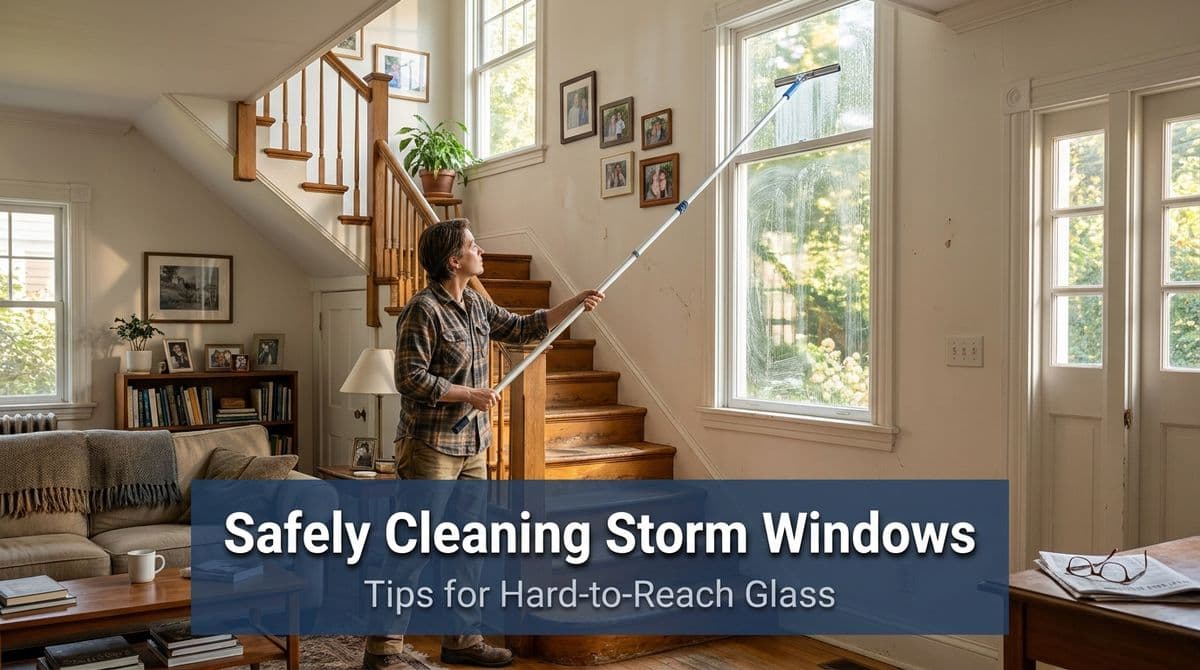
A Call About an Older Home with Storm Windows
We recently got a call from a customer — let's call her Carol — who lives in an older home with classic storm windows and a sunroom full of glass. She told us, laughing a little, that she felt like she had “a zillion windows,” but a few of them were starting to worry her.
Like a lot of homeowners in older houses, Carol used to handle the windows herself. She’d remove the storm windows, clean everything, and even reach out over a basement stairwell from the sunroom to wipe a fixed pane she couldn’t otherwise access. Now, she’s understandably less comfortable climbing, leaning, and stretching over stairs and railings — and she’s not alone.
That conversation reminded us how many folks are in the same boat: older homes, storm windows, bow or bay windows, sunrooms, and tricky, high glass. So we thought it would be helpful to share the same safety-first advice and practical tips we gave Carol.
Understanding Storm Windows in Older Homes
Storm windows are common in older houses. They add insulation, protect original windows, and help with noise and drafts. But they also add layers of glass and frames that can make cleaning more complicated.
With Carol’s house, we talked through different types of windows:
- Standard double-hung windows with storm panels outside.
- A bow window with exterior glass panels that someone had warned her not to remove anymore.
- A sunroom with multiple three-pane sections, including some over a basement stairwell.
Each of these needs a slightly different approach for safe, effective cleaning. The key is to know when a panel should come off, and when it’s safer to leave it in place.
When to Remove Storm Windows (and When to Leave Them Alone)
Storm windows are designed to be removable, but age, paint, caulk, and shifting frames can turn a simple task into a wrestling match. With Carol, we walked through this rule of thumb we use on older homes:
- Remove storm windows if they slide or lift out smoothly, the framing is solid, and there’s no warning about them being difficult to reinstall.
- Leave them in place if they’re heavily caulked, warped, or if a previous contractor has warned they may not go back on easily.
In Carol’s living room, a pro had told her years ago, “Don’t take those outside panels off again — they’ll be hard to get back on.” That’s exactly the kind of situation where we clean what we can safely reach, inside and out, without forcing panels off and risking damage or air leaks.
If you’re unsure about a particular storm window, it’s better to ask a pro to assess it than to start prying. A slipped panel or cracked glass can cost much more than a careful cleaning.
Safely Reaching High and Hard-to-Access Glass
Carol’s biggest worry wasn’t the regular windows; it was the sunroom and the glass over the basement stairs. She used to lean out from an open section, arm stretched, cleaning a fixed pane that hung over the stairwell. She finally decided that risking a fall just wasn’t worth it.
We completely agreed. Anytime there’s a stairwell, uneven floor, or big drop underneath, cleaning becomes a safety issue, not just a chore. Here’s how we handle those situations:
- Professional-grade extension poles: We use long, stable poles with microfiber sleeves and squeegees to reach tall windows without leaning over edges.
- Sturdy ladders with levelers: These let us adjust safely on slight slopes or near steps, instead of balancing on improvised setups.
- Two-person safety checks: When we’re near stairwells or balconies, one of us climbs while another spots, stabilizes, and watches footing and angles.
If you’re a homeowner, our advice is simple: never lean over a stairwell or railing just to reach glass. If you can’t comfortably stand with both feet stable on a flat surface and reach the window without stretching, it’s time to call in help.
DIY-Friendly Window Cleaning Tips (When It’s Safe)
There are plenty of windows you can tackle yourself, especially at ground level and on easy-to-reach interiors. Here’s the basic process we recommend to our customers:
- Mix a simple solution: about 1–2 teaspoons of dish soap in a gallon of warm water. For extra shine, you can add a cup of white vinegar.
- Use a soft microfiber cloth or sponge to wash the glass from top to bottom.
- Squeegee from top to bottom, wiping the squeegee blade with a clean towel after each pass.
- Wipe edges and any drips with a dry microfiber cloth.
Avoid abrasive pads or harsh cleaners on older glass and frames. Original windows in older homes can scratch more easily, and older paint may be lead-based, so you don’t want to sand, scrape aggressively, or create dust without proper safety measures.
How Often Should Older Windows Be Cleaned?
When Carol asked how often she really needed to have everything done, we gave her the same general guidelines we share with other homeowners:
- Standard windows (inside and out): 1–2 times per year for most homes.
- Sunrooms and large glass areas: 2–4 times per year, especially if they’re a main feature of your living space.
- Storm windows: A thorough cleaning at least once a year, with lighter touch-ups as needed.
Older homes in areas with a lot of pollen, dust, or nearby roads may need more frequent cleanings to keep glass clear and frames in good shape. Regular cleanings also give us a chance to spot developing issues like failed seals, soft wood, or loose caulk before they turn into bigger repairs.
Getting Your Home Ready for a Professional Window Cleaning
When Carol decided she wanted us to handle the whole house — including the tricky sunroom end over the basement stairs — we walked her through how to get ready for our visit. A little prep makes the job smoother and faster, especially in an older home with storm windows.
Here are a few things we recommend:
- Clear access to windows inside: Move furniture, plants, and decorations a couple of feet away from the windows where possible.
- Take down fragile window decor: Remove small knickknacks, hanging crystals, or delicate blinds you’re worried about.
- Let us know about any “no-touch” areas: If there are panels a previous contractor has warned you about (like Carol’s bow window), tell us in advance so we can plan our approach.
- Point out stairwells and uneven flooring: Anywhere our ladders will go near a drop or slope is something we want to know ahead of time.
On our end, we take care of counting the windows correctly — including multi-pane setups like Carol’s three-in-one sunroom sections — and we build a quote that reflects any added work with storm windows or hard-to-reach glass.
When in Doubt, Put Safety First
Older homes have a charm you can’t replace, but they also come with quirks: storm windows that don’t like to budge, bowed living room glass, and sunroom panes that hang over stairwells. With the right tools and techniques, they can all be cleaned safely and beautifully — the key is knowing when to DIY and when to call in a team that does this every day.
If you ever find yourself thinking, “I used to be able to reach that, but I don’t feel comfortable anymore,” listen to that instinct. That’s exactly why we’re here: to handle the ladders, the long poles, and the tricky access points, so you can enjoy the view without risking a fall.